Welcome to the Lusaka Contemporary Art Centre (LuCAC) Film Screenings!
Explore the compelling intersection of visual storytelling and contemporary art with our film screenings. Our mission is to highlight the diversity and richness of cinematic expressions from Zambia and across the globe, promoting a deeper understanding of the creative process behind film and visual arts.
Our carefully curated film screenings feature a wide range of genres and styles, focusing on specific themes, movements, and filmmakers. Each screening is designed to provoke thought, inspire dialogue, and provide a platform for critical reflection on the art of filmmaking.
We are committed to making art accessible to all. Our film screenings are open to the public and free of charge, ensuring a diverse and inclusive space where everyone can enjoy and engage with the transformative power of film.
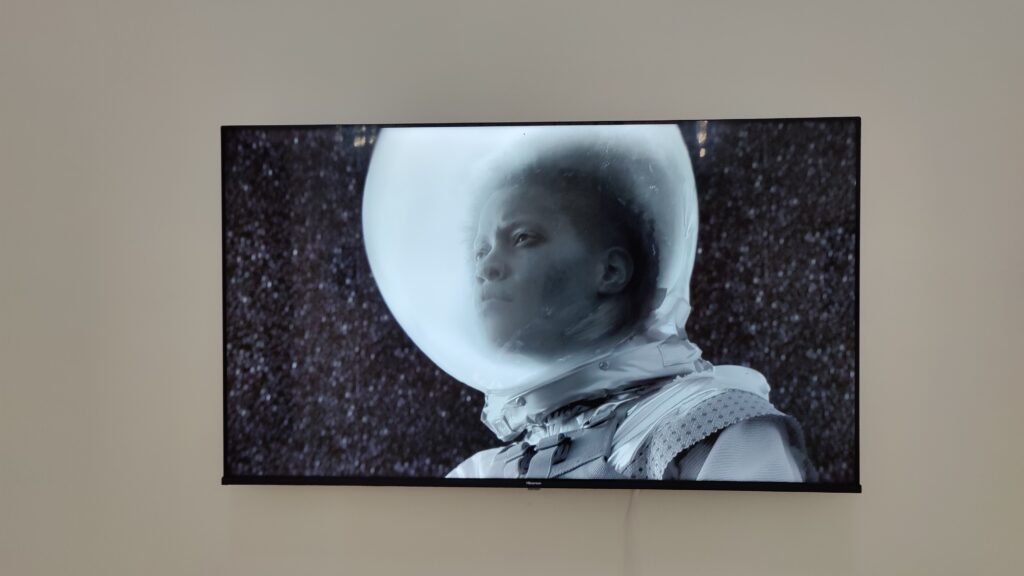
AFTER THE DREAM
“After the Dream” screening opened on Saturday, the 13th of January 2024, and lasted Until Saturday, the 3rd of February 2024. The featured Projects in the screenings included Afronauts by Nuotama Bodomo, the Afronaut by Kabinda Lemba, Post-independence Video Archives belonging to Steinar Bosnes (1920-2018) Edited by Njamu Koni, Nachitindikana by Aaron Mulenga, We Are The Future By Chembo Liandisha
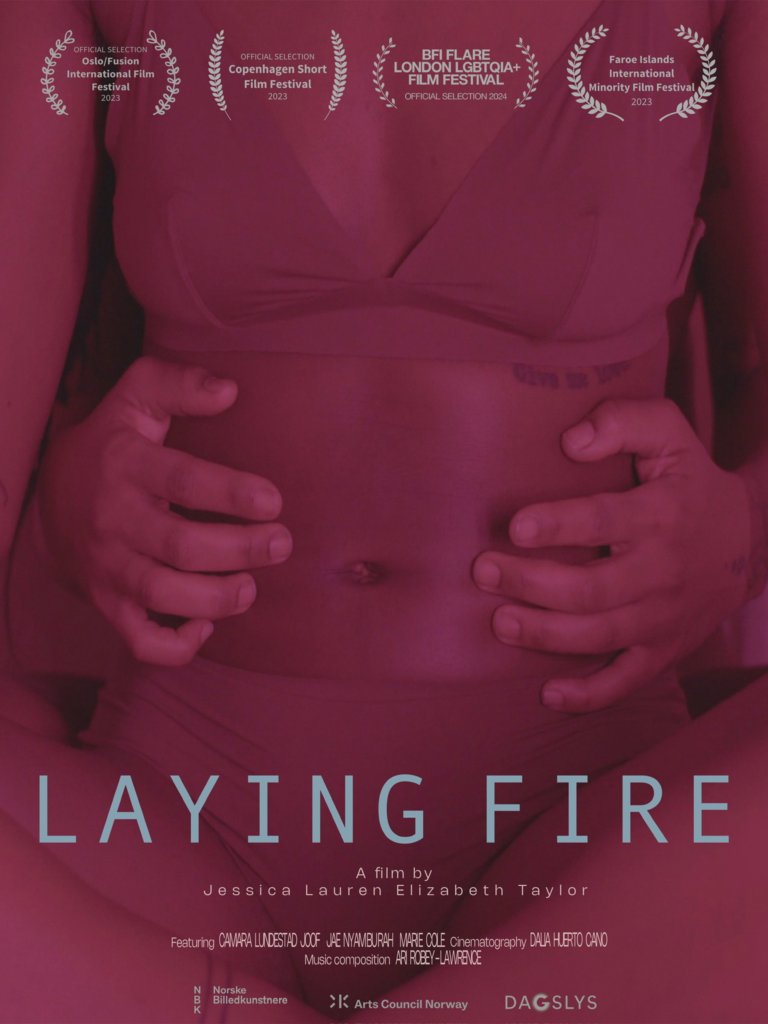
LAYING FIRE
laying fire is an experimental memory work on intimacy. Using real-life portraits of queer Black Norwegian femmes, the film explores revolutionary ways of being in partnership with our beloveds and ourselves. The film questions societal expectations of gender and sexuality and how to interrogate these expectations through a queer Black lens. The Screening was held on July 19 2024

PRIVATE SCREENING OF ALICK NKHATA FILM DOCUMENTARY
Alick Nkhata THE MAN, THE MUSIC Film Documentary is a testament to his legacy where his music played a crucial role in the cultural landscape of Zambia during colonial rule. His ability to blend traditional rhythms with contemporary themes made his music appealing to a broad audience, and his songs often contained subtle messages about the social and political issues of the time.
The Private Screening was held on December 19, 2024
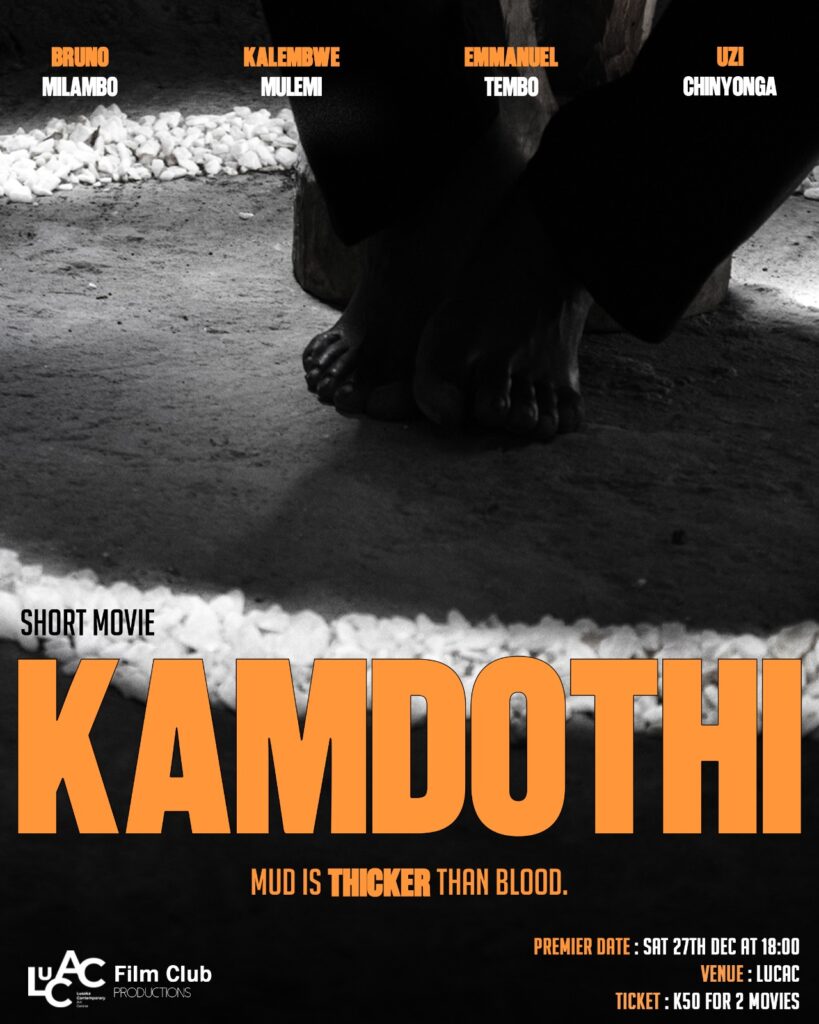
KAMDOTHI
Mud is thicker than blood
On 27 December 2025, the LuCAC Film Club hosted a special film screening that marked a major milestone in the Centre’s creative programming. The event debuted, for the first time, two films produced under the Film Club between September and November 2025, it also featured Threads, a short film written, directed, and shot by Alex S
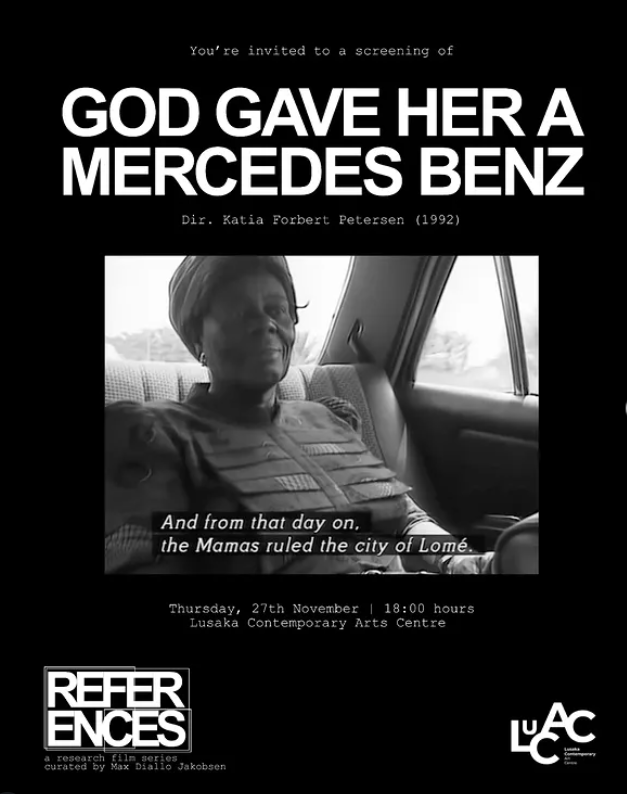
GOD GAVE HER A MERCEDES BENZ (1992)
A curated film series by Max Diallo Jakobsen during his residency with LuCAC on some of the films that guide his research as part of the references film series. First screening was GOD GAVE HER A MERCEDES BENZ (1992), a documentary about the Nana Benz, wax print, textile economies, and more.
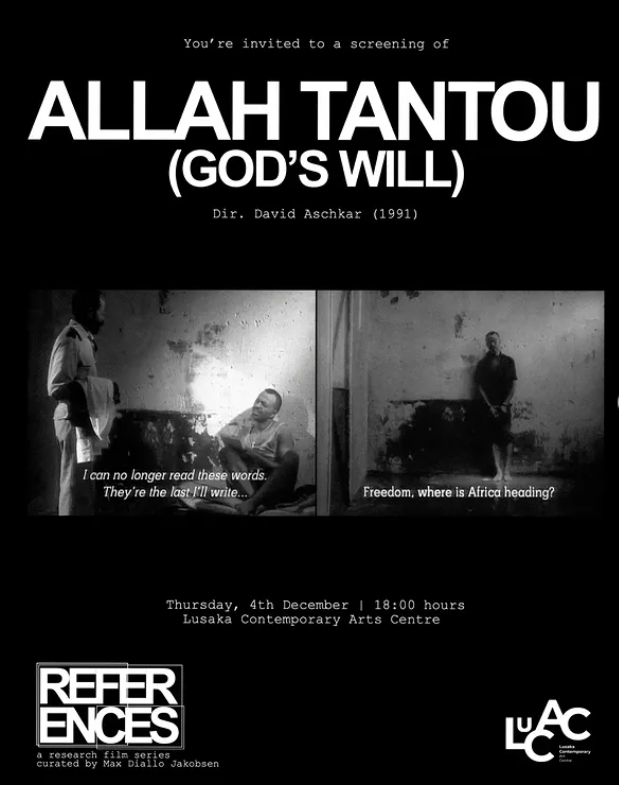
ALLAH TANTOU (1991)
The second film screened under the references series was ALLAH TANTOU (1991) by David Achkar. Through a son’s search for his father, who vanished into Camp Boiro in 1968, the film offers a beautiful yet painful meditation on memory, loss, and political repression. It stands as one of the earliest African films to grapple with state violence in the post-independence era.
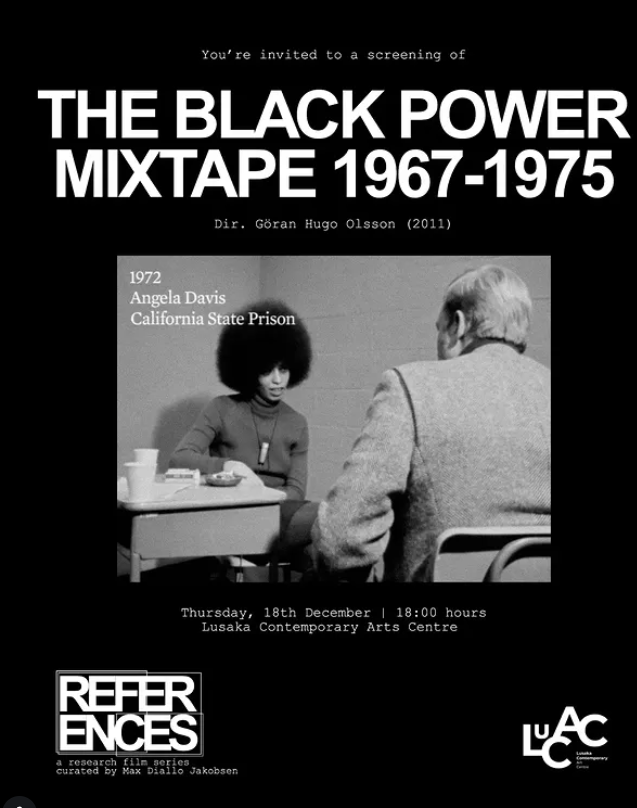
THE BLACK POWER MIXTAPE 1967-1975
To close the References film series curated by Max Diallo Jakobsen, we screened The Black Power Mixtape 1967–1975, directed by Göran Hugo Olsson. We crossed the Black Atlantic to examine the Civil Rights and Black Power movements unfolding in the United States during the same period. Through remarkable archival footage captured by Swedish journalists granted unprecedented access, the film brings together some of the most influential voices of the era, offering a powerful reflection on struggles for liberation, justice, and self-determination
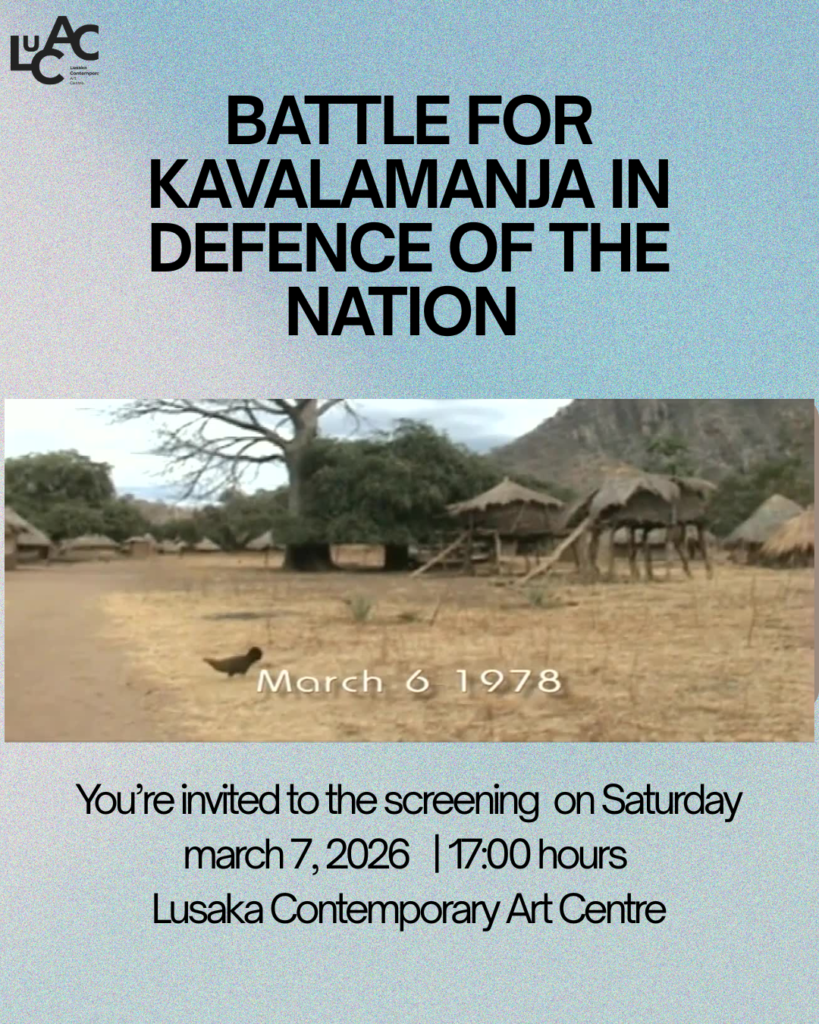
BATTLE FOR KAVALAMANJA IN DEFENCE OF THE NATION
To launch our LuCAC monthly Film Screenings, we screened a powerful 43-minute documentary by YEZI Arts that uncovers the often-overlooked history of liberation wars fought on Zambian soil. The film recounts the events of 6 – 9 March 1978, when Ian Smith’s Southern Rhodesian Army carried out a devastating 72-hour attack on the villages of Kavalamanja and Kakaro in Luangwa District. Through meticulous documentation and testimonies from survivors, YEZI Arts preserves the memory of those harrowing days and the resilience of the communities affected. Since 2008, the organization has also led an annual commemoration honouring the civilians and armed personnel who were killed or injured during the attack. The year 1978 remains one of the bloodiest in Zambia’s history, marked by coordinated cross-border assaults and widespread destruction as the collapsing Rhodesian regime intensified its pursuit of freedom fighters across Frontline States, including Zambia.
1970 MUFULIRA MINE DISASTER
For our second screening, we presented a documentary produced by YEZI Arts that revisits one of the most tragic industrial disasters in Zambia’s history. On the night of 25 September 1970, the collapse of a tailings dam released more than one million tons of mud, sand, and water into the underground workings of the Mufulira mine. In complete darkness, miners struggled to survive as the flood tore through the tunnels, ultimately claiming the lives of eighty-nine workers. Through rare testimonies from survivors and those connected to the event, the film offers a poignant reflection on loss, resilience, and remembrance. More than a historical account, it explores the human impact of the disaster while raising important questions about mine safety, collective memory, and the enduring role of mining in the economic and social fabric of Zambia.
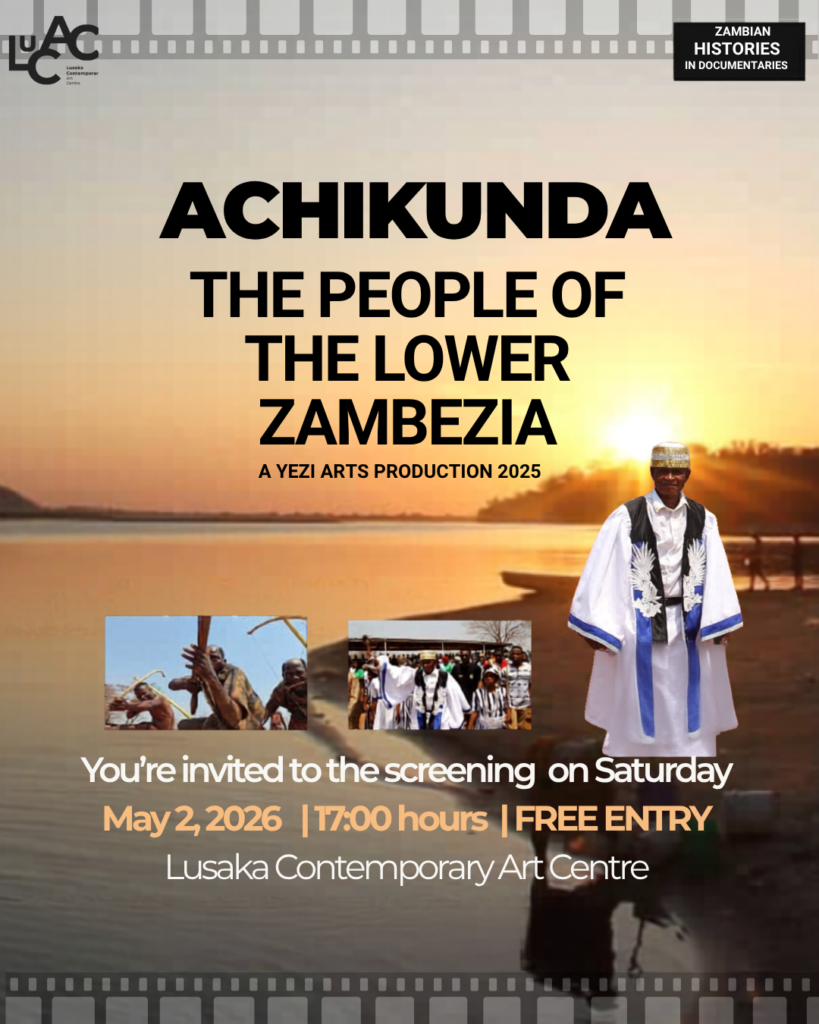
ACHIKUNDA
The people of the lower Zambezia
For our third screening in May, we presented a documentary on the People of the Lower Zambezi, produced by YEZI Arts that explores the rich history and cultural heritage of the Chikunda-speaking people of the Lower Zambezi region, spanning Zambia, Zimbabwe, Mozambique, and Malawi. The film traces the origins of the Chikunda, a minority community shaped by Afro-Portuguese influences that emerged from groups of slave soldiers settled along the Zambezi. Through historical accounts and cultural narratives, the documentary highlights the community’s distinctive identity, traditions, and language, a unique linguistic blend born from the interaction of multiple ethnic groups. At a time when the Chikunda language faces the threat of extinction, the film serves as both a celebration of cultural resilience and a vital act of preservation.
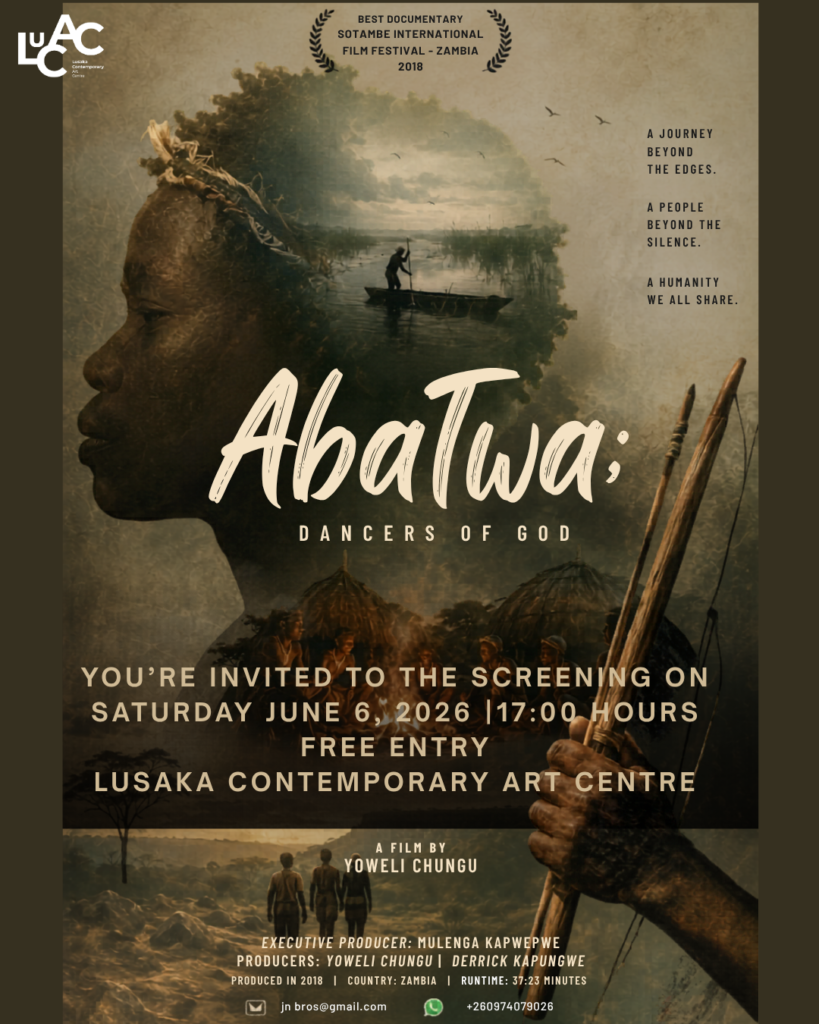
ABATWA
Dancers of God
For our fourth screening, we presented Aba Twa: Dancers of God, an award-winning documentary executive produced by Mulenga Kapwepwe and produced by Yoweli Chungu and Derrick Kapungwe. Focusing on the Aba Twa bush people of Luapula, the film offers a compelling exploration of their cultural traditions, histories, and enduring relationship with the land. Through intimate storytelling and rich documentation, the documentary brings attention to a community whose heritage is an integral part of Zambia’s cultural landscape. The screening provided an opportunity to engage with, remember, and reflect on this important piece of cultural history while celebrating the knowledge, practices, and identities that continue to shape the Aba Twa community today.
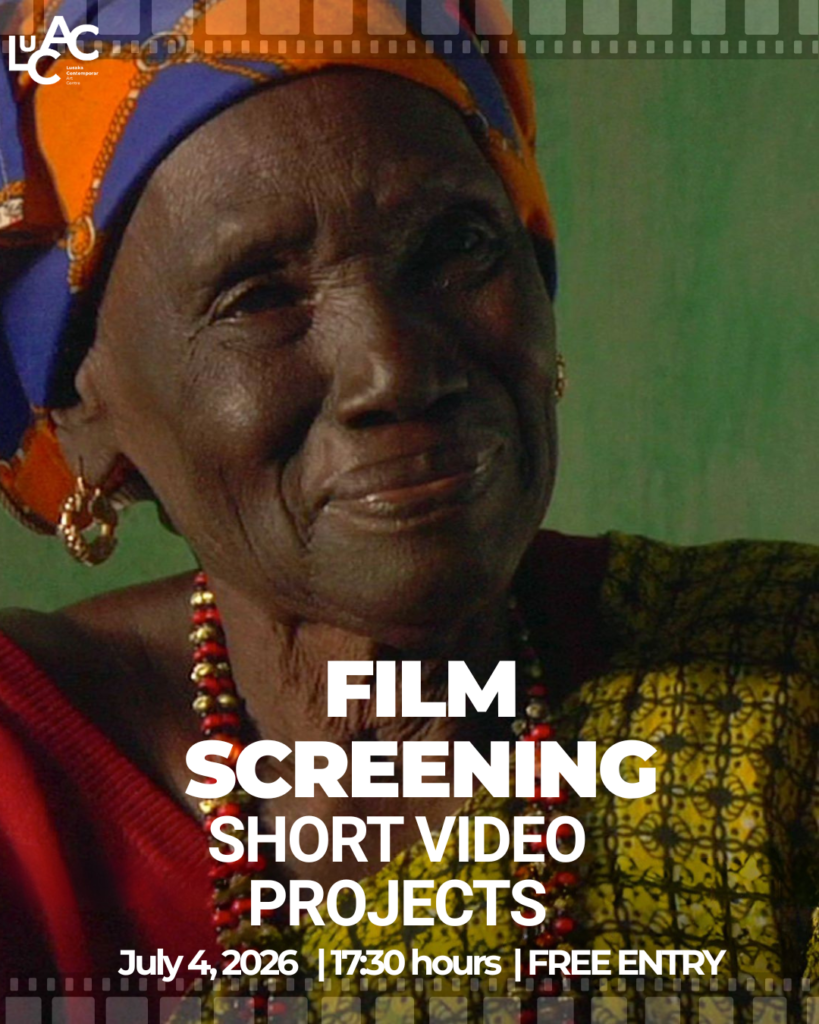
SHORT VIDEO PROJECTS
- I will show you
- Yenden Joff: An important Story
- The play, the actors, the improvisation
As part of Apolonija Šušteršič’s residency, we screened three Short Video Projects produced by Gitte Villesen in partnership with Amadou Sarr on Saturday, July 4, 2026.
The short video projects stemmed from her partnership with Amadou Sarr, a traditional Gambian musician and storyteller. Sarr not only serves as a guide into the social fabric, oral traditions, and magical belief systems of his community – all stories and all encounters were discussed and developed in close conversation with Amadou Sarr. In this process, they, at her wish, intentionally shifted the lens to the women surrounding Amadou Sarr to counter the male-dominated narratives of music and magic.
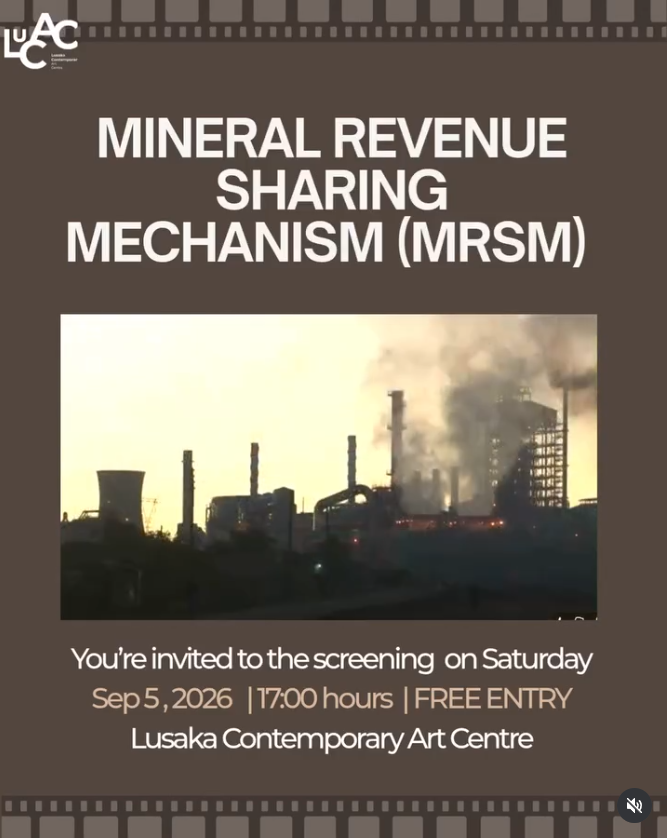
MINERAL REVENUE SHARING MECHANISM (MRSM)
After skipping our screening for August, we screened a 45-minute documentary on Saturday, September 5, 2026, commissioned by the Centre for Trade and Policy Development (CTPD), supported by OXFAM Zambia, and produced by YEZI Arts Promotions & Productions.
The documentary focuses on Mufulira and explores Zambia’s Mineral Revenue Sharing Mechanism (MRSM), highlighting the experiences of communities affected by mining and the importance of ensuring they meaningfully benefit from the country’s mineral wealth.
The screening provided an opportunity to reflect on the progress of the mechanism introduced in August 2025 and the need to ensure mineral revenues contribute to better infrastructure, education, health, and livelihoods for host communities.