Text By Bruno Milambo
How To Build a Collection
Beyond the pursuit of aesthetic gratification, one must question the true essence of art as expression, language, cultural heritage, and even history. The value constituted in the symbolism, material of choice, or medium selected by the artist carries a gravitas connotation, not only for the individual, but as representation of thought on a societal scale. When we ponder what meaning and relevance particular works hold, it is important to identify the themes and underlying narratives that create synergies around these works as they give credence to the greater plight of the contribution of art to society.
“Eventually, an artist’s style triumphs, but in the beginning everybody gets fixated on subject matter” – Avis Berman.
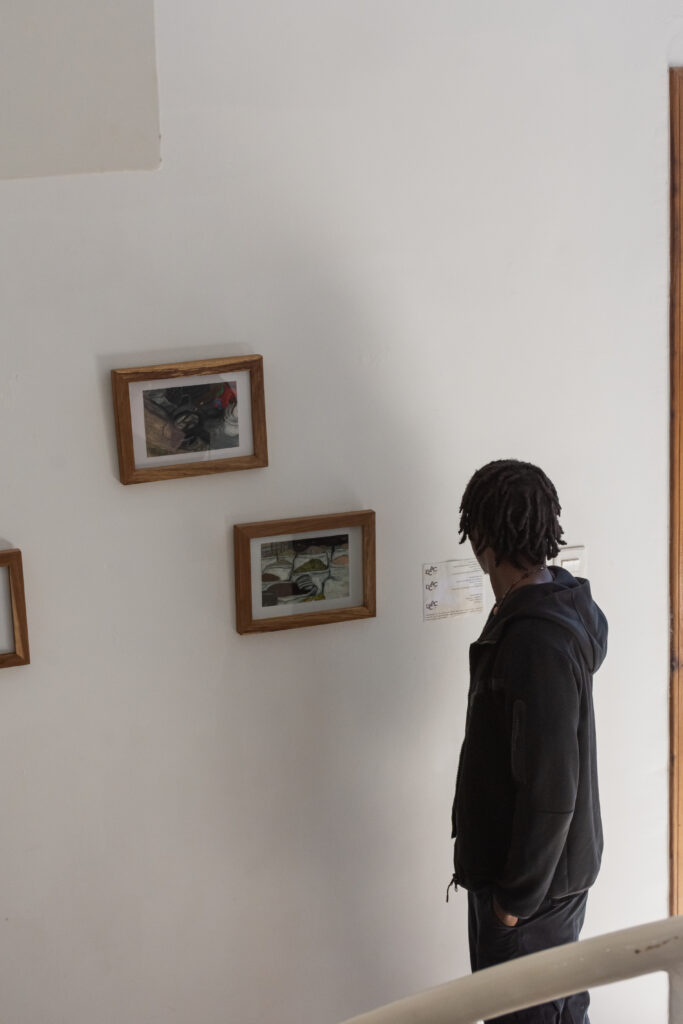
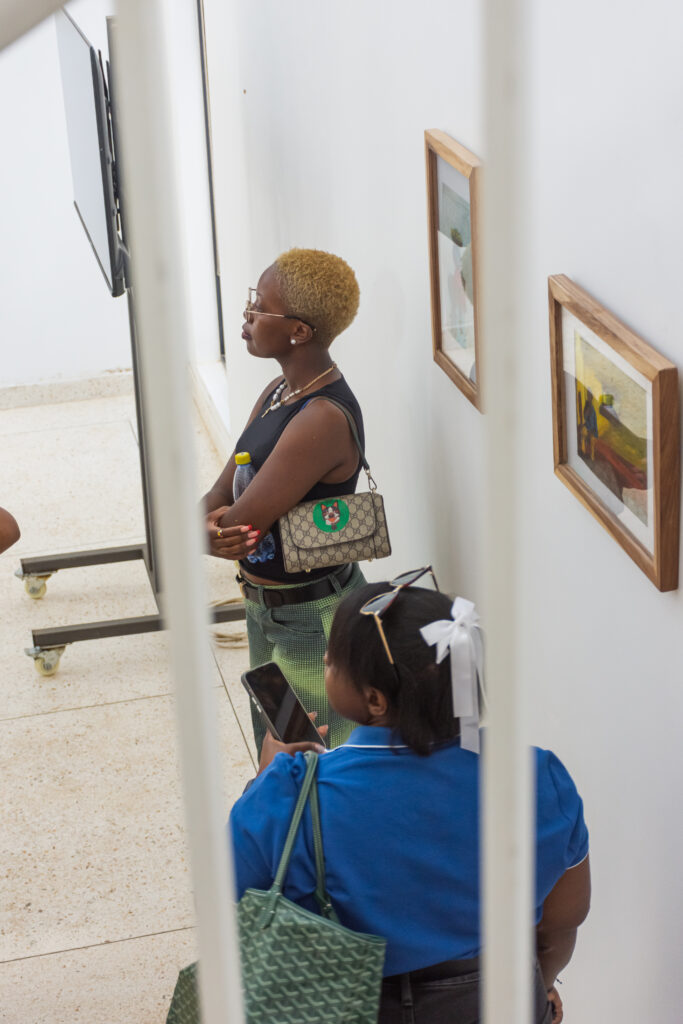
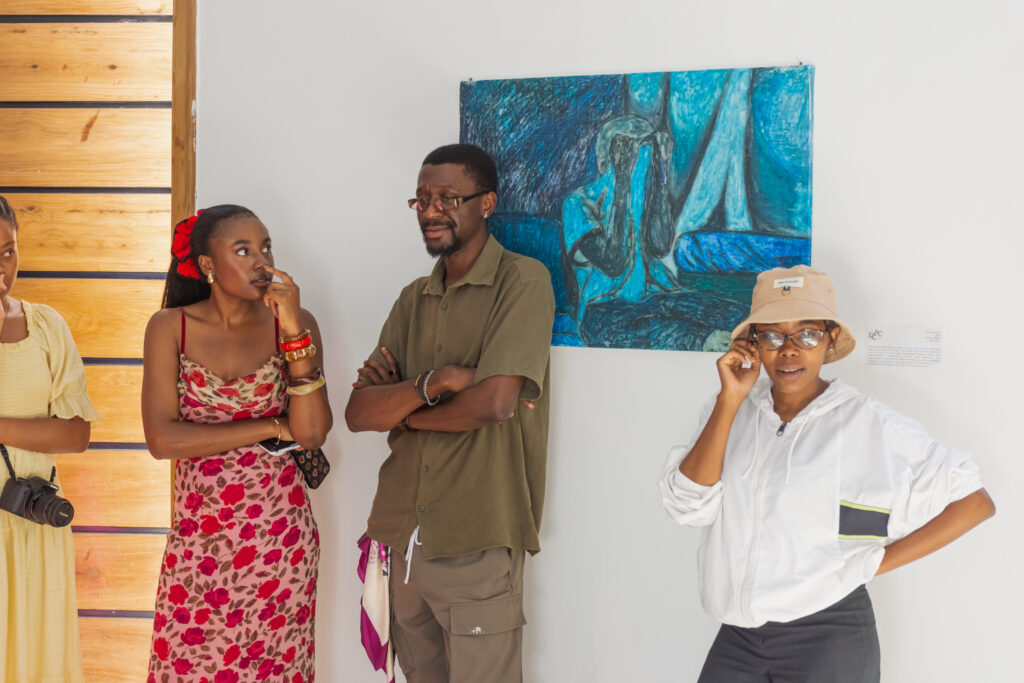
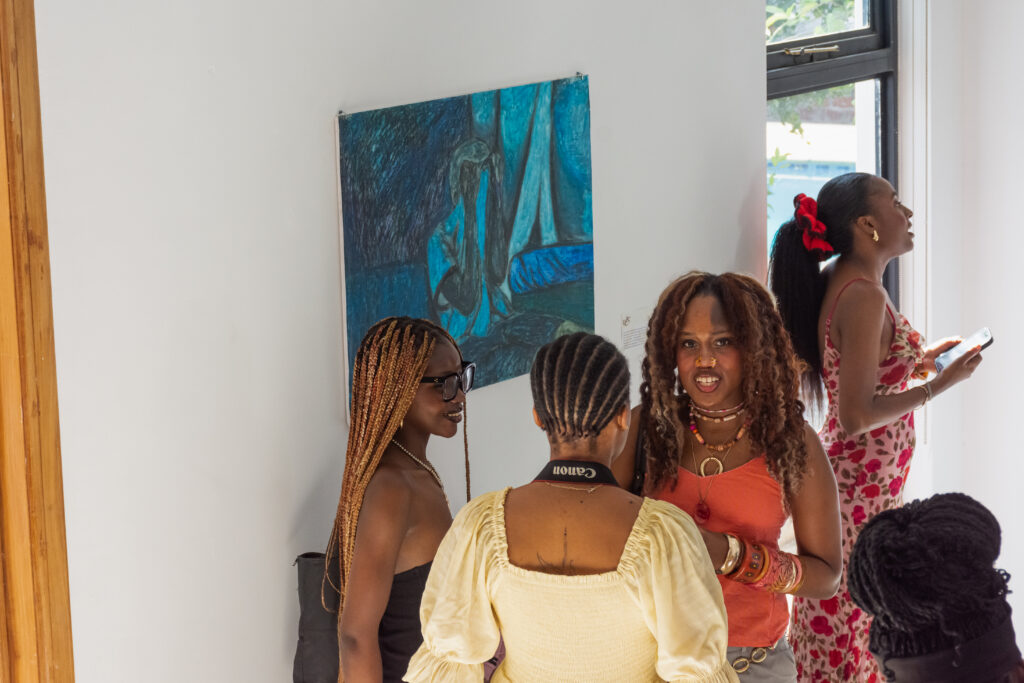
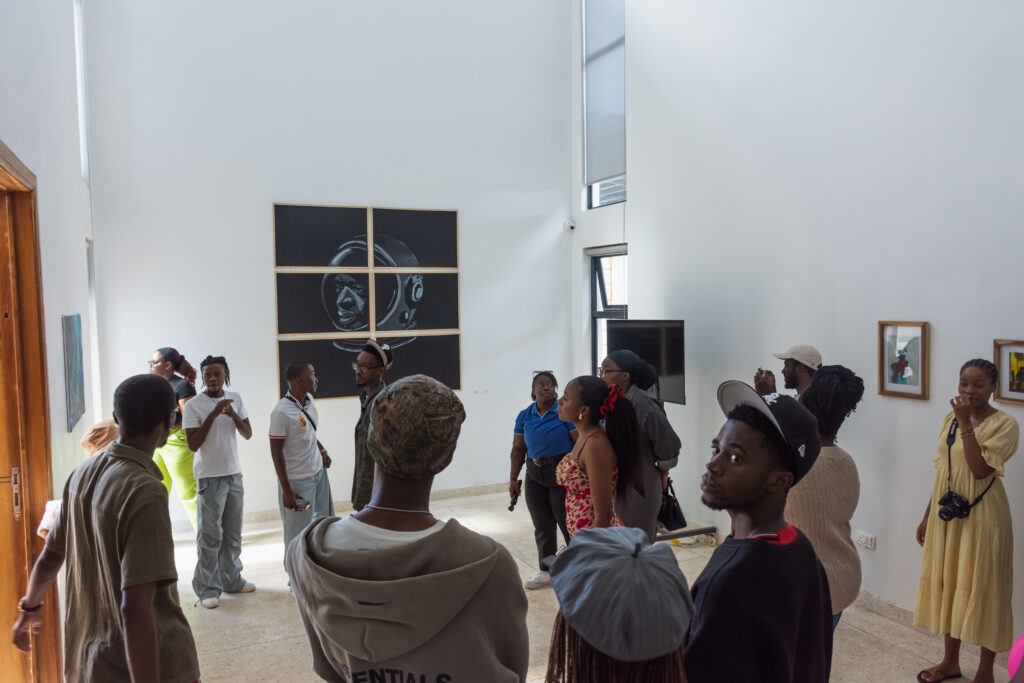
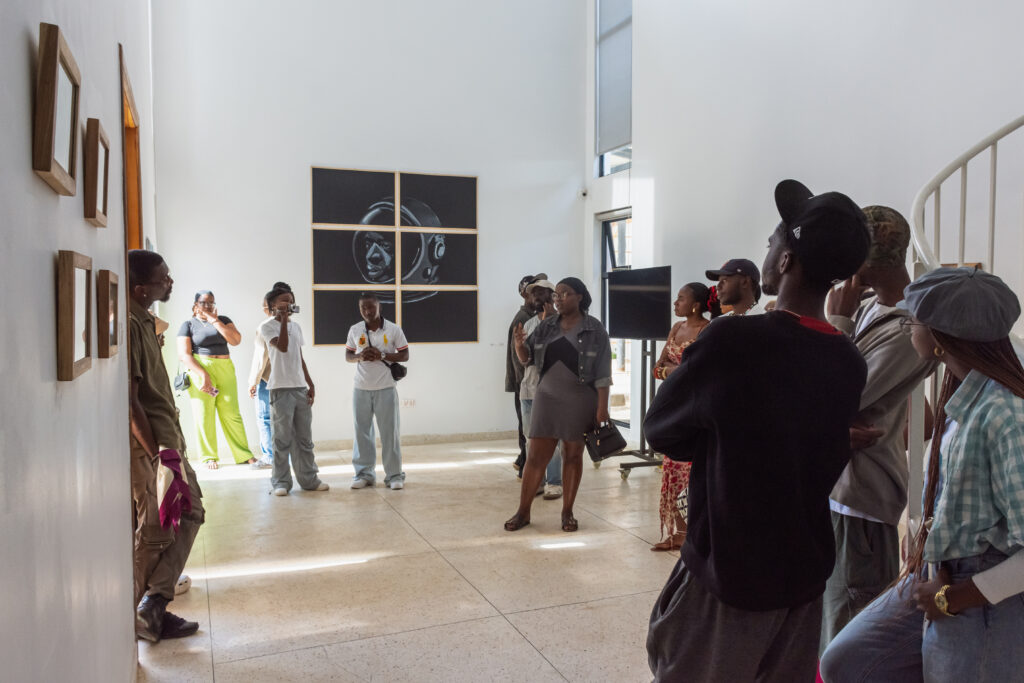
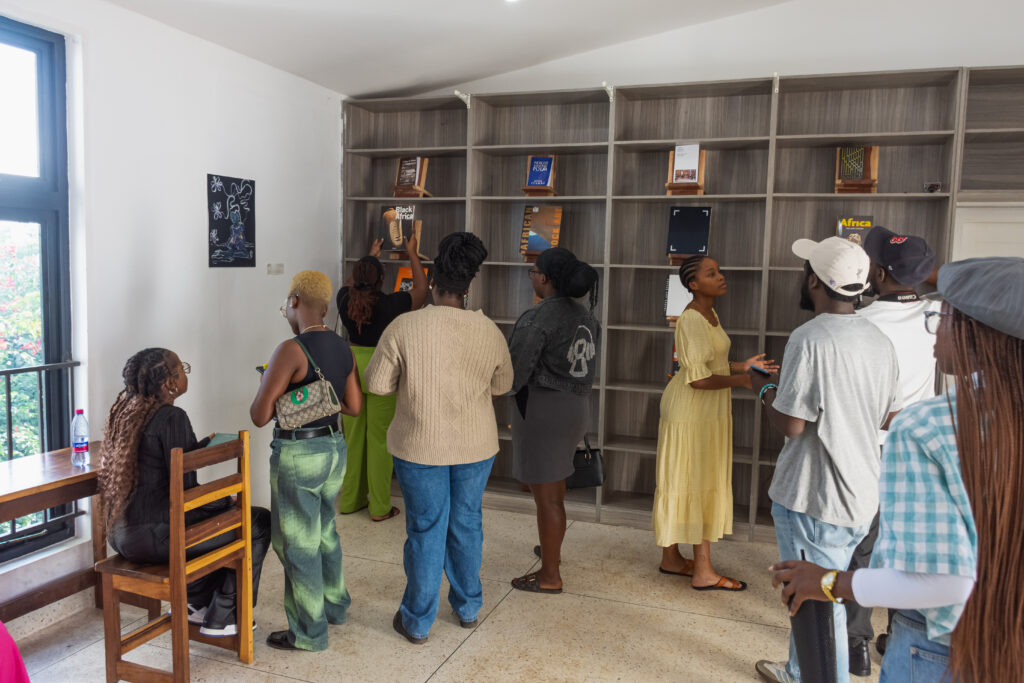
This exhibition is centered around contextualizing Zambian identity as the nexus of artistic exploration and experimentation. Featuring works from the collection of Lusaka Contemporary Art Centre, the exhibition consists of a host of emerging and experienced artists, working through connecting threads and themes of Identities and belonging. The works, aligning with LuCAC’s mission of championing Zambian artistry and decolonial narratives, are an accumulation of diverse and multi-generational voices and perspectives through which curated conversations can be evidenced in the subtlety of compositions, concept, content or context. Challenging the status quo is a pivotal foundation for any united community and society.
In his last novel, The Wretched of the Earth, French Political Philosopher Frantz Fenon argues on National Identity and Social consciousness, that a genuine national identity must be built on a revolutionary consciousness that involves the active participation of the masses and a commitment to social justice and economic independence, rather than being a superficial construct created by the national bourgeoisie. He warned that without this deeper transformation, nationalism can devolve into a divisive and exclusionary racism and chauvinism, where the new elite and competing groups resort to racism to maintain their positions.
Fenon envisioned national consciousness not as a retreat into precolonial history, but as a present, ongoing, and dialectical process of forging a new, non-colonial reality through collective struggle.
Similar ideologies are prevalent throughout the exhibition as works are in
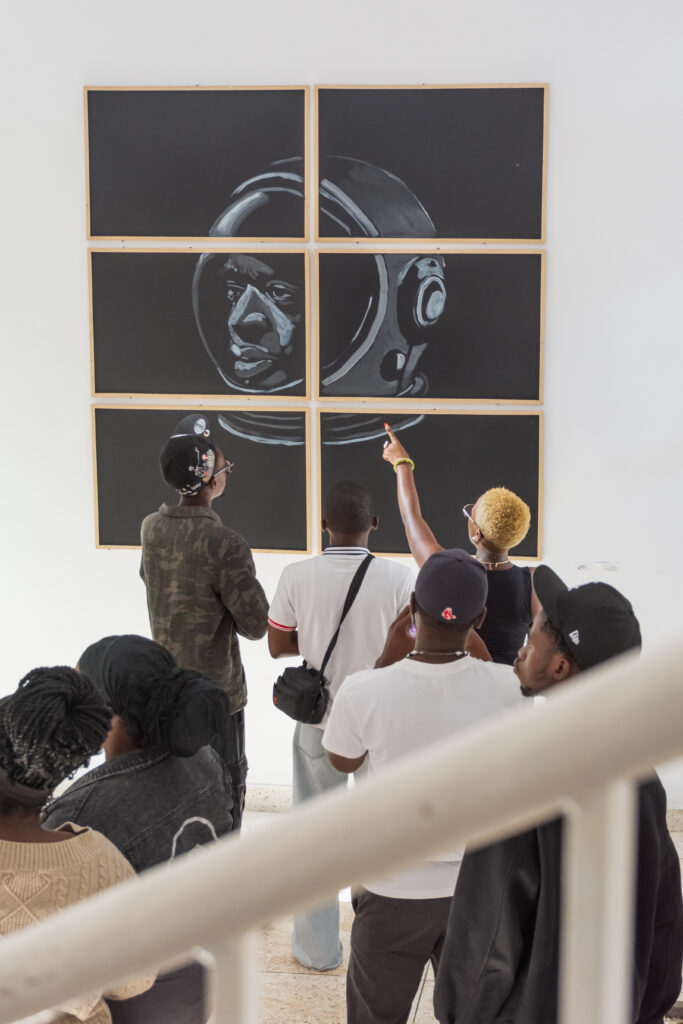
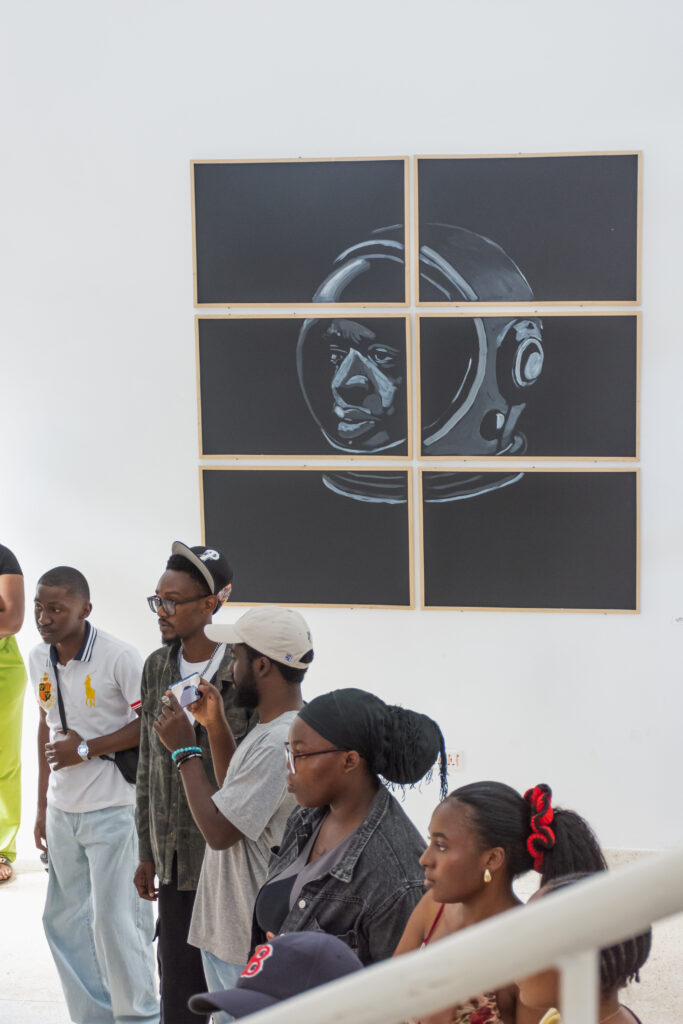
dialogue. The work of See Fadlabi, who explores the visionary of Edward
Mukuka Nkoloso, depicts not only a man in a space suit, but a representation of the possibilities of a national symbol of solidarity and conscience in achieving a dream. Gloria Hankombo paints from the perspective of reconnecting with a cultural heritage of a community she became detached from due to the allure of acceptance among peers, while Alinafe Wilson captures emotional settings at the confluence of societal
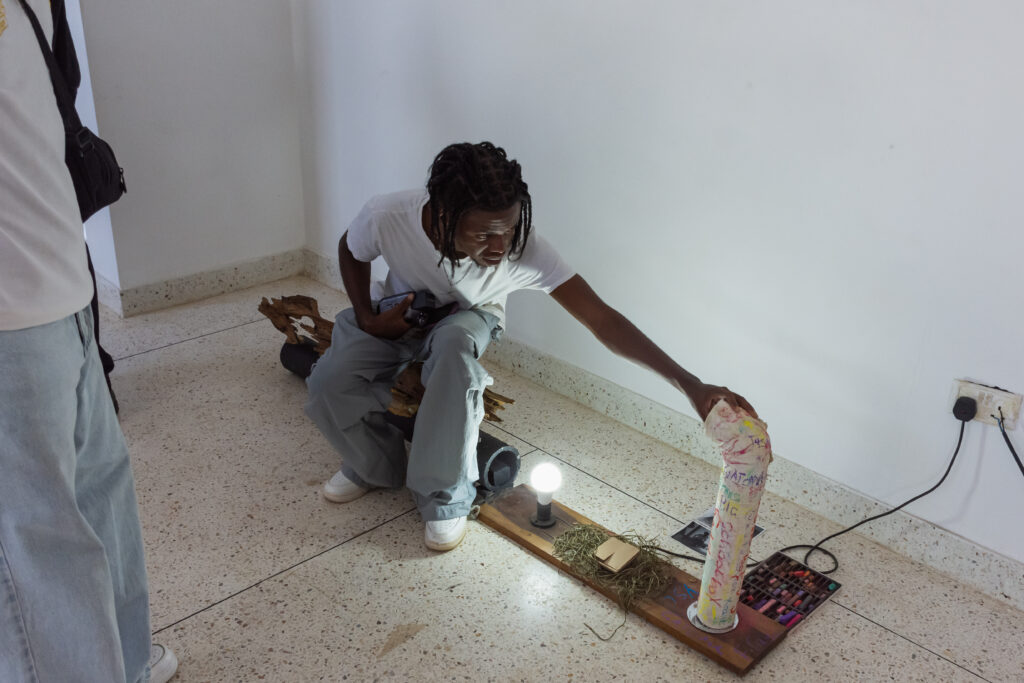
influence and individual identity through rhythmic strokes of bold, striking colors and figures seemingly belonging but yet somehow devoid of being. One can start to find threads in the material used by an artist to perpetuate building an inclusive community, making art for everyone while creating community engagement in the process of inspiring collective thought of sorts. Farsi’s use of Chitenge Material and line to express femininity is a powerful anecdote to the generational intangible cultural heritage and transference of knowledge, expressing the understanding of this material and its continued relevance to the girl child in our society. Hanna Sjöstrand, through her material choice, contextualizes significant Zambian history and access from a post-colonial perspective while speaking of an extended empathy to not only humans but nature as well. Similarly, Bruno Milambo
questions the place of traditional cultural practices in our present-day Zambian societies, incorporating repurposed materials with old techniques of repair and futurist ideas of belonging into his installation.
The collection sits as an example of empowerment through knowledge and art practice, and is a comprehensive representation of the artist’s exploration rooted in collective thought that seeks to delve deeper into the world of contemporary art.